
New JASA-EL Paper Out
My PhD student Jeremy Lawrence found a way to faithfully model the tiny atmospheric fluctuations caused by temperature differences in the air. Together with Zeyu Xu he integrated his idea into the diffraction-enhanced image source method (DEISM). Great collaboration to increases realism in room simulations. Thanks to ASA’s editor for highlighting our research:
EDITOR'S PICK Integrating atmospheric fluctuations into the image source method https://doi.org/10.1121/10.0044473
— Acoustical Society of America (@asa-news.bsky.social) 3:00 PM · Aug 2, 2026
[image or embed]
Four New PhD Openings
I am delighted to announce that, as part of the newly awarded research project “From Silence to Story: Revisiting TCD’s Long Room through Acoustics and Immersive Storytelling,” our interdisciplinary team is offering four fully funded PhD opportunities across a range of disciplines. This is a unique chance to join an ambitious, collaborative project at the intersection of acoustics, computer science, digital media, and storytelling.
All application details at: https://dh.tcd.ie/index.php/projects-2/from-silence-to-story.
One of these four openings will be under my supervision:

MSCA Postdoc Application 2026
I am happy to support MSCA postdoc applications to work with me at Trinity College Dublin. For more details go here. Application deadline is April 30, 2026.

One month until IS2 2024

We are getting ready for an unforgettable IEEE 5th International Symposium on the Internet of Sounds (IS2 2024) at the International Audio Laboratories Erlangen. with more than 75 accepted contributions comprised of papers, posters, technical demos, and musical performances & installations that will push the boundaries of what’s possible with the Internet of Sounds. All complemented with a lineup of 4 inspiring keynotes by Hanna Lukashevich, Georg Hajdu, Pieter-Jan Maes, Toon van Waterschoot, and an expert panel discussion about the opportunities and challenges of the musical metaverse.
Register until Sep 10 for a reduced rate to attend this 3-day event from Sep 30 – Oct 2.
All details at https://internetofsounds2024.ieee-is2.org/
Best Paper Award

How Does the Future Sound Like?
Call for Submissions – AES Spring Convention 2023
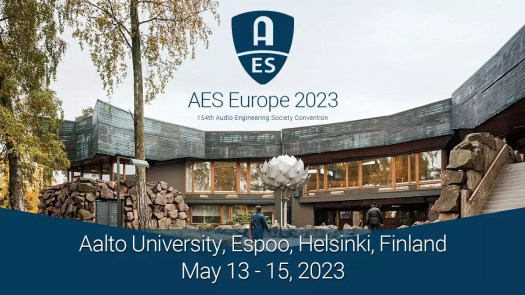
Sebastian J. Schlecht and I are Paper Co-Chairs for the upcoming AES Spring Convention in Helsinki, Finland. The submission deadlines for the different paper categories start at January 27, 2023. All details about the submission process can be found here.
What does DALL-E know about Audio Technology?
After signing up for the waitlist a few weeks ago, I just got access to openAI’s DALL-E 2 beta service. DALL-E is a machine-learning based image generator based on natural language processing. In other words, you type in a description of your desired image, and press the “generate” button. After a few seconds, you’ll see four images, as interpreted by the image generator which you then can further refine. DALL-E can generate astonishing results, if you need images like a Teddy bears mixing sparkling chemicals as mad scientists in a steampunk style as in this demo.
But what knows DALL-E about Audio Technology?
I used some of my 40 credits to find out. The first query was about spectrograms. Would DALL-E know how the spectrum of a sone tone look like? You’ll see the answers below. This doesn’t look right, does it?

OK, next I tried a few audio buzz words, hoping for some insights into DALL-E’s view of the world. You see some of my query results below. Most images reveal typical stereotypes known from stock photos. Looking at the “Immersive Audio” results, wearing flannel shirts and touching your headphones is essential for acoustic immersion.
Spatial Audio:

Immersive Audio:

Internet of Sound:

Concert in the Metaverse:

Current Call for Submissions
I am involved in the organization of two upcoming conferences: The next AES convention in May and the 3rd Workshop on the Internet of Sounds in September.
Needless to say, I look forward to many high-quality submissions, (especially) about spatial audio and the internet of audio things.
More details on the conference websites (see links below).
AES Europe Spring 2022 (152nd AES Convention)

Call for Submissions (deadlines in February)
3rd International Workshop on the Internet of Sounds (part of audio mostly ’22)

Call for Submissions (deadlines in April May)